
I wanted to bring nervous systems to the table this week and how they show up in the workplace. Maybe because I, like many, find this time of year has an increased effect on mine.
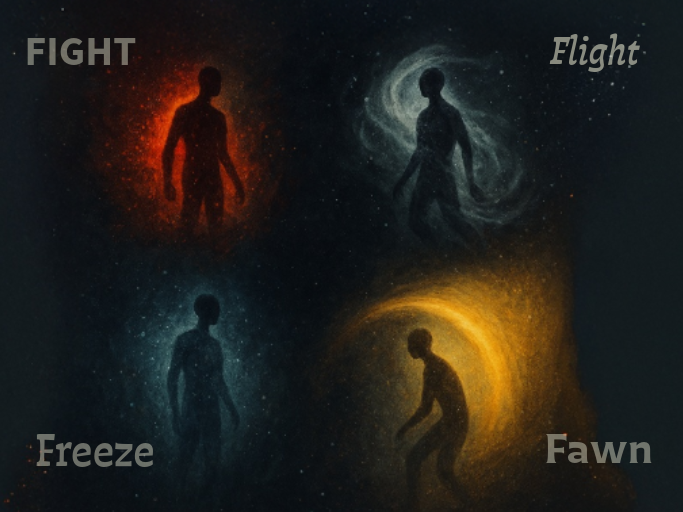
Workplace stress is universal, but the way we respond to it is not. The classic fight or flight model explains two common reactions: confrontation or avoidance. But there are two more responses that are often misunderstood. These are freeze and fawn.
- Fight: Energy rises, leading to assertiveness or conflict.
- Flight: Withdrawal or escape from the stressor.
- Freeze: The nervous system conserves energy, resulting in silence, freeze, or disengagement.
- Fawn: A reflex to appease others, over-agree, or people-please in order to stay safe.
For neurodivergent employees, freeze and fawn can be frequent and misread. Silence may be seen as disengagement. Agreement may be mistaken for consent. In reality, all are protective mechanisms.
Why this matters in the workplace:
- Recognising all four responses prevents misinterpretation.
- Inclusive policies (sensory-friendly spaces, flexible communication, psychological safety) support diverse stress reactions.
- Normalising these responses builds trust, autonomy, and resilience.
- Awareness, understanding, and consideration help build more effective teams
Being curious about nervous system responses can open up a whole world of understanding, so I think it's a worthwhile topic to explore.
Closing thought:
👉 By embracing fight, flight, freeze, and fawn as valid stress responses, we create workplaces where everyone feels seen, respected, and supported.
Where do you see nervous system responses showing up in your workplace, either yourself or others? I would be interested to hear people's thoughts in the comments.
And just in case you were interested, whilst I have moments of all four, my predominant response tends to be fawn, followed closely by flight.